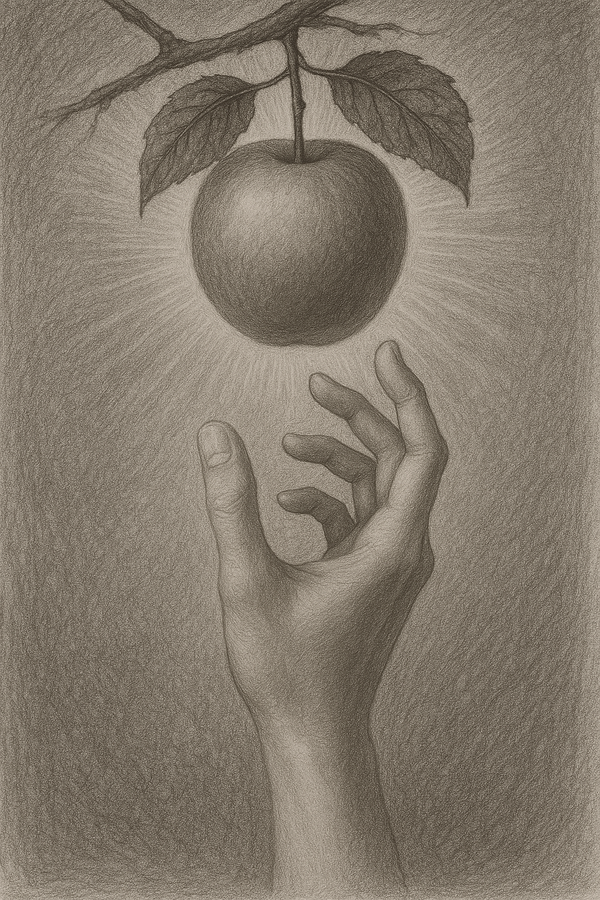
Sowing Seeds

In the morning sow your seed, and at evening withhold not your hand, for you do not know which will prosper, this or that, or whether both alike will be good.
-Ecclesiastes 11:6
In many conversations lately, I've found myself returning to this idea of sowing seeds. It's a metaphor that resonates with me deeply, especially in light of all the projects I've been involved with. Take Lee's Heart, for example, the non-profit I co-founded last year. When we started that initiative, there was no clear vision of where it might lead. All we knew was that we wanted to do something meaningful and nurture it as it grew. What began as a conversation about designing a cool team-room-style T-shirt between my best friend and I, it has now manifested as an official 501(c)(3) organization with a dedicated board of five members. Our united goal is to support first responders with programs that promote mental health initiatives and community building. With our first retreat planned for June of this year, countless individuals and organizations have reached out to offer their support. It's shaping up to be more fruitful than I ever imagined.
This idea of planting seeds has become a guiding philosophy for me. I was raised in the church so the metaphor of planting seeds and pruning the soul has been a familiar idea to me since I was a boy. I want to sow as many seeds as possible, with as much variety as I can reasonably tend to and then witness the fruits that come to bear. Each project I undertake is an opportunity to experiment, to learn, and to cultivate something that might flourish in ways I can't yet predict.
Planting seeds applies not only to creative endeavors but also to personal and financial freedom. Over time, people contribute to various savings and investment vehicles, each one representing a seed that has the potential to grow into financial security. Whether it's a company-sponsored 401(k), a tax-deferred IRA, a post-tax Roth IRA, or an individually managed brokerage account, these investments have the power to shape our future. Personally, I use all of these vehicles and plan to write more on this topic in future posts. The idea is simple but powerful: a seed not planted is a garden not grown.
Financial success, like any garden, demands time, consistency, and patience. Regular contributions and disciplined investment allow small, seemingly insignificant actions to compound over time. The principle is the same whether you're nurturing a business, a skill, or a financial portfolio. Every dollar invested or project undertaken is a potential seed capable of bearing fruit, sometimes in ways you never expected.
This concept of planting seeds also applies to developing a wide range of knowledge and skills. As generalists, we equip ourselves with the tools to adapt to and take advantage of opportunities as they arise. The more seeds we plant in terms of learning—whether it's through reading, experiences, or new challenges, the better positioned we are to seize the moment when unexpected doors open. Opportunities rarely announce themselves in advance. Often, it's only those with a diverse set of skills who recognize and have the capability to act on them. As the saying goes, luck in success is a function of preparation meeting opportunity.
By continuously cultivating knowledge across multiple domains, we strengthen our ability to innovate and solve problems creatively. This diversity of experience becomes our competitive edge in a world that increasingly values adaptability over rigid specialization. Every new skill or area of expertise represents another seed, with the potential to grow into something that might shape our careers, relationships, or personal fulfillment. This is the crux of manifesting what you want out of life—whether it relates to family, freedom, wealth, or success. Whatever word you choose, the journey begins by planting the seed.
However, part of cultivating any successful garden is knowing when to trim and prune. Not every seed we plant will thrive, and some ventures may grow in ways that no longer serve us. It’s essential to be honest with ourselves about which projects, habits, or investments continue to provide value and which have become burdens. There’s no shame in cutting things loose when they no longer bring satisfaction or growth. Pruning isn't failure; it’s a necessary part of creating space for new growth and opportunities.
I'll give you a personal example. Last year, I started a business venture that, by all metrics, was successful. I 10x my initial investment by starting a mobile, on-call IV hydration and oxygen concentrator rental business in a Colorado resort town. Within months, I was close to matching my full-time salary and considered briefly leaving my job to focus on scaling the business. However, despite its financial success, the venture brought me no joy or satisfaction. I didn’t feel I was providing real value to my clients beyond a novelty experience—an overpriced placebo of vitamin enhanced hydration therapy. Most of the time, I felt like I was simply administering a solution people could replicate by drinking water and taking a multivitamin. Eventually, I decided to leave that venture behind and move on to projects that genuinely excite me. Besides, flying is much more fun and rewarding.
The Opus Perpetuum is one such seed. I don't expect it to make me wealthy, nor do I anticipate breaking even on the investment I’ve made to bring it to life. But that's not the point. The point is that it's planted. It's there, a sapling, growing and evolving. I'm excited to see what it will become.
Sowing seeds is an act of hope and possibility. It requires patience, care, and a willingness to embrace the unknown. There is also a profound joy in the process—in nurturing an idea and watching it slowly take form and function. I'm slowly learning and accepting that the journey is more rewarding than any guaranteed outcome.
I hope your gardens are full someday.