After Eden: A Post-Abrahamic Reflection on Civilization and the Choice Before Us
“For what shall it profit a man, if he shall gain the whole world, and lose his own soul?” — Mark 8:36
The following has been an idea long in development for many years. It began with a book that I have read at least half-a-dozen times and recently revisited after a dinner conversation turned philosophical treatise. Ishmael opened a crack in the framework I had inherited; the one that said civilization was the pinnacle of human achievement, ordained by God, and that technological advancement was inherently good. In Ishmael's telling, the story of humanity was not one of simple progress, but of rupture: a moment when we ate the fruit from the Tree of Knowledge and decided to separate ourselves from the wild law of nature. As the narrator reflects, "With man gone, will there be hope for gorilla?" and the reply comes: "With gorilla gone, will there be hope for man?" (Quinn, Ishmael, 1992). The book suggests that the myth of human supremacy is not just dangerous, but fatal.
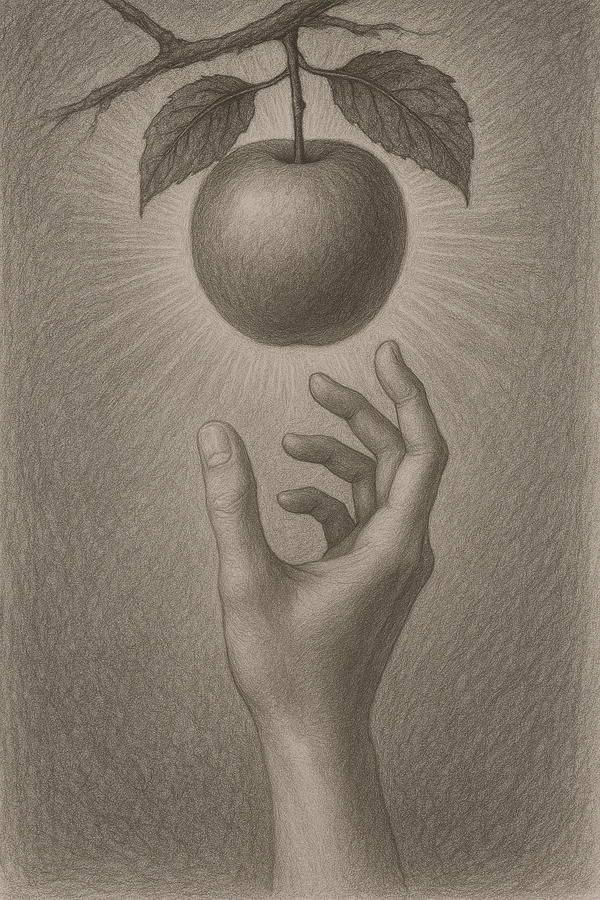
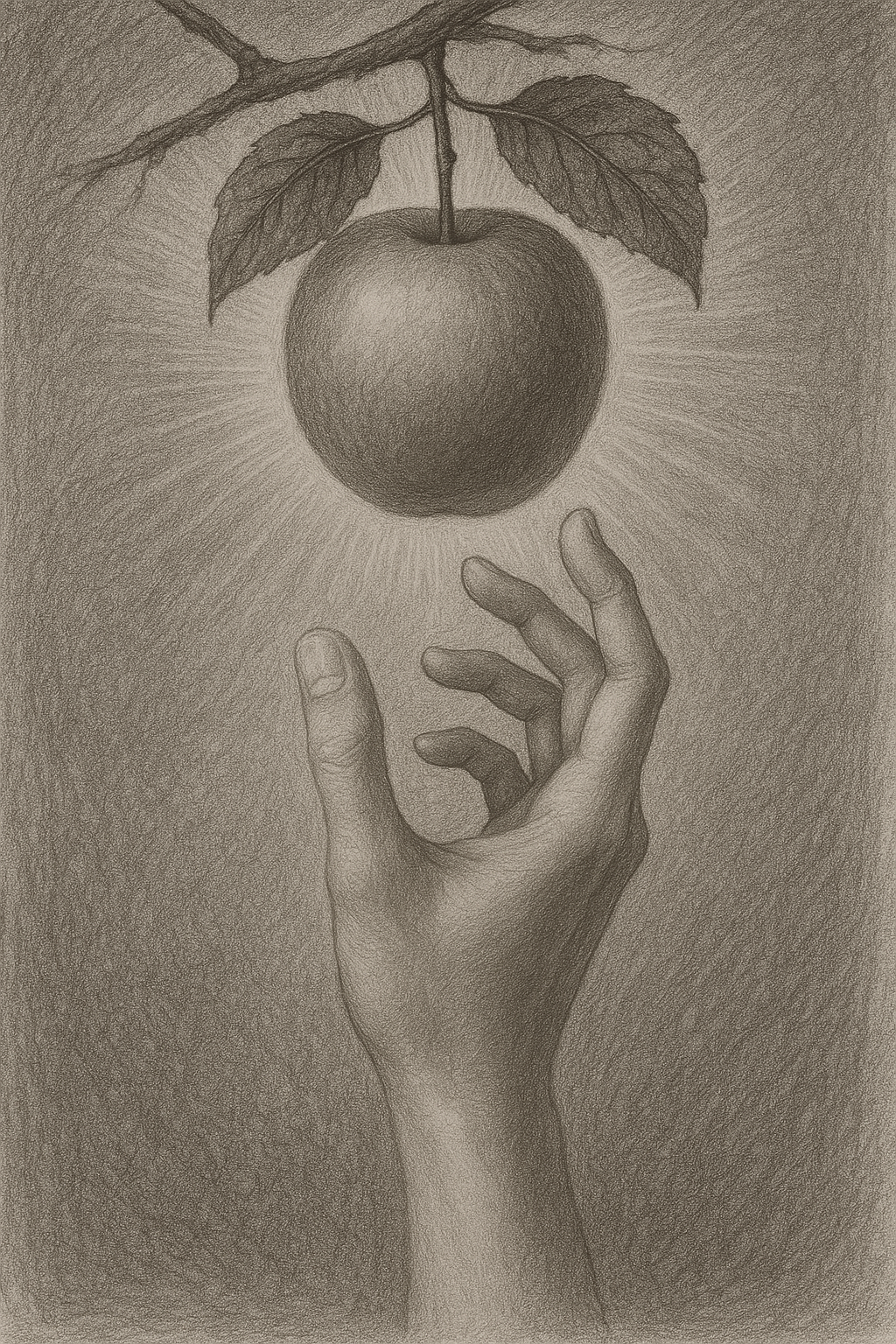
That moment in which Adam and Eve had taken and consumed the Fruit of Knowledge was not a myth, but a metaphor for the Agricultural Revolution. The fall from Eden was not a historical footnote, but the beginning of a new story: one of control, of surplus, of law. And so began the arc of civilization as we know it.
In that light, the Bible’s earliest stories transform. Adam and Eve become the first agrarians, cast out of the harmony of the Leavers, the hunter-gatherers, and thrust into the burden of knowledge and labor. "By the sweat of your face you shall eat bread" (Genesis 3:19), God tells Adam. Cain and Abel are no longer just siblings in a tragic tale, but symbols of two incompatible ways of life. Cain, the farmer who offers wheat as a sacrifice, kills Abel, the herder who offered the Lamb. The agrarian kills the shepherd (Genesis 4:1–8). The new world displaces the old. The development of mathematics, economics, science, religion, literature, culture and all of the other transformative aspects of civilization were born out our understanding in how to reap and sow the soil beneath us.
From there, the Abrahamic religions: Judaism, Christianity, and Islam, I see as a kind of civilizational trilogy, each chapter addressing a different stage in humanity’s evolving relationship with knowledge, power, and the divine.
Judaism emerged in the early formation of agrarian law, with a people wandering toward order. Dietary rules, social contracts, land ethics: these weren’t arbitrary. They were early algorithms for tribal survival in a world no longer governed by natural cycles. "You shall not sow your field with two kinds of seed" (Leviticus 19:19). "You shall leave them for the poor and for the sojourner" (Leviticus 19:10). These were guidelines for sustainable living, equity, and identity in a newly ordered world.
Then came Christianity, a radical update in the spiritual software. No longer were external rules sufficient; the law must now be written on the heart. "I will put my laws into their minds and write them on their hearts" (Hebrews 8:10). In Christ, we saw not only a prophet but a protest. A man who dared to tell the priesthood that love was greater than law, that peace was greater than purity. He died for this, a martyr not just to sin, but to the impossibility of fixing a broken world through structure alone. Christianity is the religion of the soul in crisis, of the human being who has tasted knowledge and can never return to innocence.
Islam, the final chapter, arrives with judgment. It codifies once more, but with clarity and finality: submit to God before the end comes. "Indeed, the religion in the sight of Allah is Islam" (Qur’an 3:19). "Every soul will taste death. And you will only be given your [full] compensation on the Day of Resurrection" (Qur’an 3:185). In this view, the arc has reached its peak. The world is what it is. The choice is simple, align with the divine, or prepare for the apocalypse. The book closes. The seals are broken. The cycle ends.
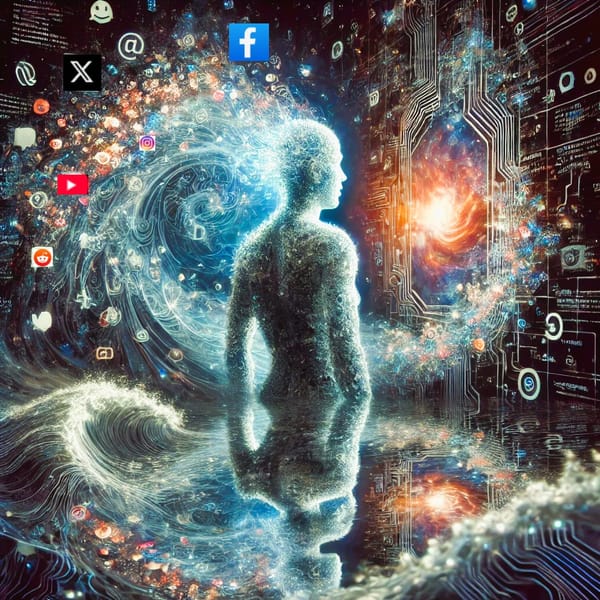
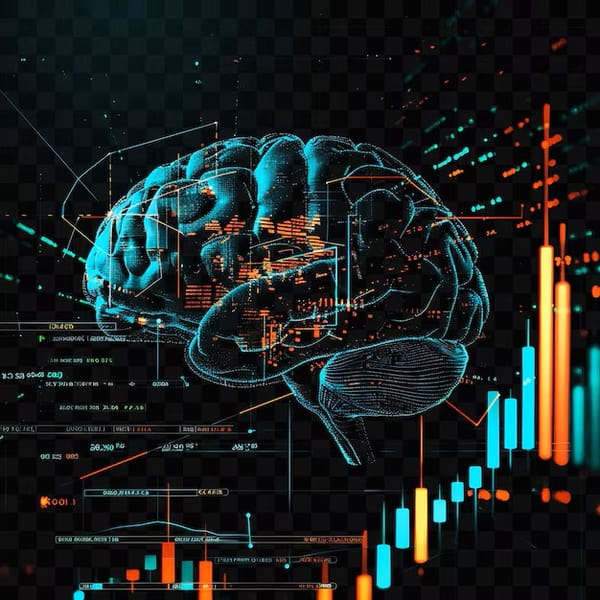
But now, we are faced with a choice none of the prophets predicted, at least not explicitly: the rise of artificial intelligence, and with it, the potential augmentation of humanity itself.
This is not speculation. It is already happening. Elon Musk’s Neuralink project has begun implanting brain-machine interfaces, with the stated goal of enabling humans to merge with artificial intelligence. In 2024, the company announced its first successful human trials. Meanwhile, AI systems are being integrated into defense systems, financial markets, creative work, and medical diagnostics, all domains once governed exclusively by human intuition, skill, or authority.
What is the Mark of the Beast, if not the conscious decision to become other-than-human? To integrate so deeply with machine intelligence that we are no longer subject to death, to humility, to nature? What is the end of days, if not the final break from all that is natural, vulnerable, and divine?
And yet, I do not fear AI. In fact, I am wildly optimistic. I believe in its capacity to end hunger, cure disease, house the homeless, and even help us unlock the mysteries of the universe that we haven't even imagined the questions for yet. I believe AI could be the Promethean gift that lights our way forward.
But I also believe that who wields it matters. That the systems we build will only reflect the souls of their architects. That without a moral framework, without reverence for the sacred, without humility, we will become gods without wisdom.
This is the true Revelation. Not a cosmic war, but a psychological and spiritual one. Not fire and brimstone, but a question whispered in every heart:
Will you trade mystery for mastery? Will you abandon the soul for the circuit? Will you forget God because you've learned to play gods?
The Post-Abrahamic era does not mean post-spiritual. It means the myths must evolve and we must re-encounter the divine not in temples or texts alone, but in our choices, our codes, and our creations.
Still, I carry tension deep in my spirit. Having been raised in the Christian faith, the Book of Revelation is not merely literature to me, it was part of the very soil in which my identity was formed. I remember hearing my grandmother speak of the end times, of Israel surrounded, of the Beast rising, of the return of Christ to separate the righteous from the lost. I internalized this imagery, these prophecies. And even now, I struggle to fully escape their gravity.
When I read headlines about war in the Middle East, or see the advance of global surveillance and neural augmentation, I feel the echoes of that final trumpet. I ask myself: Am I watching prophecy unfold?
At the same time, I feel hope, genuine, burning hope for what technology can do. I marvel at the capabilities of artificial intelligence. I dream of a world where no one starves, where disease is rare, where work becomes meaningful again because machines have freed us from the menial and mundane drudgery. I believe that integration with machine intelligence could be the next great turning point, not toward apocalypse, but toward evolution.
But here's the tension I cannot shake: will we have to choose between dying as humans or living as something else entirely? And if we choose the latter, what becomes of our soul? What becomes of the God who breathed life into dust, not circuits? What becomes of the endless sea of consciousness that we individually experience as our lifetimes extend into the infinite? If each of us is a drop returning to the ocean, a unique expression of something greater, something divine, then what happens when we never return? If death is not merely an ending, but a sacred reabsorption, then immortality through artificial means may sever us from the cosmic cycle itself. We may gain infinite continuity but lose the very thing that makes our lives meaningful: transience, surrender, return.
I believe that we are not just biological machines but vessels of the eternal, each soul a lens through which the universe contemplates itself. If that lens is never allowed to close, to dissolve, to merge again with the sea, do we become more than human or less? Do we transcend, or do we fragment forever into selves that never sleep, never die, and never fully reunite with the source from which they came?
These are not just philosophical musings. They are existential coordinates. And as we rush toward inevitable integration with technologies that promise to outlast the flesh, we must ask: is the goal to extend life indefinitely or to understand what life is truly for?
This is the paradox of our time. A crossroads between compassion and conquest. Between synthetic eternity and sacred limitation. In the same way the Takers, eliminated the Leavers, the augmented human intelligence will outpace natural intelligence leading into a new paradigm of human dominion over nature.
So what now?
Have we built a second Eden to flourish within, or a new Tower of Babel to be struck down by our own hubris? The fruit is being offered again. But this time, we should know what it costs.
Let us then choose to eat carefully if we should choose to do so at all. Let us code with conscience. Let us integrate without annihilation.
The Garden was never destroyed. Only forgotten.
If you’ve enjoyed reading this or derived any value from any of the other articles published on this platform, I humbly ask that you consider subscribing for as little as $1 per month or a one-time donation. I hope to keep writing and exploring ideas using this medium and your support is appreciated greatly.